
Wednesday, January 26, 2011

Saturday, January 15, 2011
Algorithmic Efficiency -- Beating a Dead Horse Faster
In computer science, often the question is not how to solve a problem, but how to solve a problem well. For instance, take the problem of sorting. Many sorting algorithms are well-known; the problem is not to find a way to sort words, but to find a way to efficiently sort words. This article is about understanding how to compare the relative efficiency of algorithms and why it's important to do so.
If it's possible to solve a problem by using a brute force technique, such as trying out all possible combinations of solutions (for instance, sorting a group of words by trying all possible orderings until you find one that is in order), then why is it necessary to find a better approach? The simplest answer is, if you had a fast enough computer, maybe it wouldn't be. But as it stands, we do not have access to computers fast enough. For instance, if you were to try out all possible orderings of 100 words, that would require 100! (100 factorial) orders of words. That's a number with a 158 digits; were you to compute 1,000,000,000 possibilities were second, you would still be left with the need for over 1x10^149 seconds, which is longer than the expected life of the universe. Clearly, having a more efficient algorithm to sort words would be handy; and, of course, there are many that can sort 100 words within the life of the universe.
Before going further, it's important to understand some of the terminology used for measuring algorithmic efficiency. Usually, the efficiency of an algorithm is expressed as how long it runs in relation to its input. For instance, in the above example, we showed how long it would take our naive sorting algorithm to sort a certain number of words. Usually we refer to the length of input as n; so, for the above example, the efficiency is roughly n!. You might have noticed that it's possible to come up with the correct order early on in the attempt -- for instance, if the words are already partially ordered, it's unlikely that the algorithm would have to try all n! combinations. Often we refer to the average efficiency, which would be in this case n!/2. But because the division by two is nearly insignificant as n grows larger (half of 2 billion is, for instance, still a very large number), we usually ignore constant terms (unless the constant term is zero).
Now that we can describe any algorithm's efficiency in terms of its input length (assuming we know how to compute the efficiency), we can compare algorithms based on their "order". Here, "order" refers to the mathematical method used to compare the efficiency -- for instance, n^2 is "order of n squared," and n! is "order of n factorial." It should be obvious that an order of n^2 algorithm is much less efficient than an algorithm of order n. But not all orders are polynomial -- we've already seen n!, and some are order of log n, or order 2^n.
Often times, order is abbreviated with a capital O: for instance, O(n^2). This notation, known as big-O notation, is a typical way of describing algorithmic efficiency; note that big-O notation typically does not call for inclusion of constants. Also, if you are determining the order of an algorithm and the order turns out to be the sum of several terms, you will typically express the efficiency as only the term with the highest order. For instance, if you have an algorithm with efficiency n^2 + n, then it is an algorithm of order O(n^2).
If it's possible to solve a problem by using a brute force technique, such as trying out all possible combinations of solutions (for instance, sorting a group of words by trying all possible orderings until you find one that is in order), then why is it necessary to find a better approach? The simplest answer is, if you had a fast enough computer, maybe it wouldn't be. But as it stands, we do not have access to computers fast enough. For instance, if you were to try out all possible orderings of 100 words, that would require 100! (100 factorial) orders of words. That's a number with a 158 digits; were you to compute 1,000,000,000 possibilities were second, you would still be left with the need for over 1x10^149 seconds, which is longer than the expected life of the universe. Clearly, having a more efficient algorithm to sort words would be handy; and, of course, there are many that can sort 100 words within the life of the universe.
Before going further, it's important to understand some of the terminology used for measuring algorithmic efficiency. Usually, the efficiency of an algorithm is expressed as how long it runs in relation to its input. For instance, in the above example, we showed how long it would take our naive sorting algorithm to sort a certain number of words. Usually we refer to the length of input as n; so, for the above example, the efficiency is roughly n!. You might have noticed that it's possible to come up with the correct order early on in the attempt -- for instance, if the words are already partially ordered, it's unlikely that the algorithm would have to try all n! combinations. Often we refer to the average efficiency, which would be in this case n!/2. But because the division by two is nearly insignificant as n grows larger (half of 2 billion is, for instance, still a very large number), we usually ignore constant terms (unless the constant term is zero).
Now that we can describe any algorithm's efficiency in terms of its input length (assuming we know how to compute the efficiency), we can compare algorithms based on their "order". Here, "order" refers to the mathematical method used to compare the efficiency -- for instance, n^2 is "order of n squared," and n! is "order of n factorial." It should be obvious that an order of n^2 algorithm is much less efficient than an algorithm of order n. But not all orders are polynomial -- we've already seen n!, and some are order of log n, or order 2^n.
Often times, order is abbreviated with a capital O: for instance, O(n^2). This notation, known as big-O notation, is a typical way of describing algorithmic efficiency; note that big-O notation typically does not call for inclusion of constants. Also, if you are determining the order of an algorithm and the order turns out to be the sum of several terms, you will typically express the efficiency as only the term with the highest order. For instance, if you have an algorithm with efficiency n^2 + n, then it is an algorithm of order O(n^2).
Makar Sankranti
Makar Sankranti, the festival of harvest in India, is celebrated from 14 January 2011 to 16 / 17 January. Hindupad wishes you all a Happy Makar Sankranti. Today (14 January 2011) is Bhogi.. the day of bonfire (bhogi mantalu). In Andhra Pradesh, Karnataka, and Maharashtra, Bhogi is celebrated with utmost pomp. It is said on this day Lord Sri Ranganatha married Goddess Goda Devi. (Note: on 15 January 2011 (Sankranti), wearing red sarees or dresses is auspicious and the special food item (naivedyam) to offer to Sun God is – Kheer (Payasam).
Apart from Bhogi mantalu, Bhogi Pallu is another famous ritual on Bhogi (In some places, it is also observed on Sankranthi). ‘Bhogi pallu’ means the gooseberry fruits along with some food items, rice, other grains, coins, are kept on heads of children and they are offered to their maids as Drishti perantam. It is believed that doing such can make the children healthier, happier, and live longer. Makarajyothi festival is held during Makara Sankramana in Sabarimala Ayyappa temple. (14 January 2011 at 6.30 pm).
On Sankranti (15 January 2011) day, Sun enters into Makara Rashi. It marks the beginning of Uttarayana punyakalam. Performing punya snana (holy dip) in holy rivers such as Ganga, Yamuna, Godavari, Cauvery, etc., is highly auspicious. Lord Surya is offered special puja and special naivedyam on this day. Gangasagar Mela is held during Sankranthi.
Kanuma (16 January 2011) is the third and concluding day of Makar Sankranti festival (In fact the fourth day of Sankranti is celebrated as Mukkanuma… but it is not much popular). On Kanuma day, cattle (ox, cows, buffalos, etc.) are decorated and worshipped. In some places, Lord Shiva and Goddess Parvati; Lord Narayana and Goddess Lakshmi are worshipped on Kanuma.
Apart from Bhogi mantalu, Bhogi Pallu is another famous ritual on Bhogi (In some places, it is also observed on Sankranthi). ‘Bhogi pallu’ means the gooseberry fruits along with some food items, rice, other grains, coins, are kept on heads of children and they are offered to their maids as Drishti perantam. It is believed that doing such can make the children healthier, happier, and live longer. Makarajyothi festival is held during Makara Sankramana in Sabarimala Ayyappa temple. (14 January 2011 at 6.30 pm).
On Sankranti (15 January 2011) day, Sun enters into Makara Rashi. It marks the beginning of Uttarayana punyakalam. Performing punya snana (holy dip) in holy rivers such as Ganga, Yamuna, Godavari, Cauvery, etc., is highly auspicious. Lord Surya is offered special puja and special naivedyam on this day. Gangasagar Mela is held during Sankranthi.
Kanuma (16 January 2011) is the third and concluding day of Makar Sankranti festival (In fact the fourth day of Sankranti is celebrated as Mukkanuma… but it is not much popular). On Kanuma day, cattle (ox, cows, buffalos, etc.) are decorated and worshipped. In some places, Lord Shiva and Goddess Parvati; Lord Narayana and Goddess Lakshmi are worshipped on Kanuma.
Monday, January 10, 2011
Thursday, November 25, 2010
Enabling bengali(indic) language support in Windows XP or latter
I have got many request on how to enable bengali font too, today people are using more application like -i-leap for this purpose which dosen't have much of designing support compare to more advance word processor like Ms Word 2003 or later. Most users of such application don't know that they can enable all type of(most likely famous) language/font support in Windows. As windows comes with these packages but not defaultly installed.
The steps for enabling bengali language support is similar to enabling the hindi font. except the last step.
after installing the Supplemental language support (refer to blog : Enabling Hindi) and rebooting the computer follow these steps
Click on Start -> Settings -> Control Panel.
Double-Click on Regional and Language Options.
Goto Languages tab.
Click on Details button.
Click on Add button.
Under Input languages, click and select Bengali(india) from the pull-down list of languages.
Under Keyboard layout/IME, click and select Bengali(inscript) from the list of languages. click o.k and you are done.
In case of any problem you may write to my comments. thank you
The steps for enabling bengali language support is similar to enabling the hindi font. except the last step.
after installing the Supplemental language support (refer to blog : Enabling Hindi) and rebooting the computer follow these steps
Click on Start -> Settings -> Control Panel.
Double-Click on Regional and Language Options.
Goto Languages tab.
Click on Details button.
Click on Add button.
Under Input languages, click and select Bengali(india) from the pull-down list of languages.
Under Keyboard layout/IME, click and select Bengali(inscript) from the list of languages. click o.k and you are done.
In case of any problem you may write to my comments. thank you
Saturday, November 20, 2010
Enabling Hindi on Microsoft Windows XP
Enabling Hindi on Microsoft Windows XP
Windows XP comes with facilities to use Hindi. But the Indic capabilities are not enabled by default. One has to either enable this at the time of installing Windows XP or later. The step-by-step instructions will walk-through enabling Hindi on Windows XP. The procedure is the same for all other Indian languages supported by Windows XP.
Enabling Hindi in Windows XP
Keep the Windows XP CD ready for this step.
Click on Start > Settings -> Control Panel.
Double-Click on Regional and Language Options.
Goto Languages tab.
In the frame titled “Supplemental language support” check the “Install files for complex script and right-to-left languages (including Thai) checkbox.
Click Apply to complete the installation
Note: The system will prompt to insert the Windows XP CD. Insert the Windows XP CD that came with the system.
Reboot the system
After rebooting follow these steps-
Click on Start -> Settings -> Control Panel.
Double-Click on Regional and Language Options.
Goto Languages tab.
Click on Details button.
Click on Add button.
Under Input languages, click and select Hindi from the pull-down list of languages.
Under Keyboard layout/IME, click and select Hindi from the list of languages.
Windows XP comes with facilities to use Hindi. But the Indic capabilities are not enabled by default. One has to either enable this at the time of installing Windows XP or later. The step-by-step instructions will walk-through enabling Hindi on Windows XP. The procedure is the same for all other Indian languages supported by Windows XP.
Enabling Hindi in Windows XP
Keep the Windows XP CD ready for this step.
Click on Start > Settings -> Control Panel.
Double-Click on Regional and Language Options.
Goto Languages tab.
In the frame titled “Supplemental language support” check the “Install files for complex script and right-to-left languages (including Thai) checkbox.
Click Apply to complete the installation
Note: The system will prompt to insert the Windows XP CD. Insert the Windows XP CD that came with the system.
Reboot the system
After rebooting follow these steps-
Click on Start -> Settings -> Control Panel.
Double-Click on Regional and Language Options.
Goto Languages tab.
Click on Details button.
Click on Add button.
Under Input languages, click and select Hindi from the pull-down list of languages.
Under Keyboard layout/IME, click and select Hindi from the list of languages.
Saturday, November 13, 2010
The Significance of Chhath Festival

Chhath festival, a Hindu festival also known as Surya Shashti, is one of the ancient festivals of India dedicated to Sun God. It is celebrated in order to express one's gratitude to Sun God, the supreme source of relative light.
It falls on the sixth day of the month of Karthik (November-December), and hence its name Chhath (meaning the number six in Hindi) and hath refers to Hath Yog (austerities). The term Chhath also refers to consciously making an attempt to obtain solar energy through six stages involved in the methods of Hath Yog.
The History of Chhath Festival
One major significance of Chhath festival is that its history dates back to the Vedic period. The festival has a mention in the Rig Veda. It is believed to have started by Karna, the son of Surya during the Mahabharata era. Mahabharata states that the festival was observed by Draupati and that her problems were solved.
It is believed that the Rishis of the Vedic times observed the rites involved with it to get energy directly from the sun without the intake of food and water.
Rituals Associated With Chhath Festival
Numerous rituals also contribute to the significance of Chhath festival. The festival is observed for four days and involves a number of rituals including holy bathing, rigorous fasting without consuming a drop of water, standing in water for a long time offering prayers, offering prasad etc.
Nahakha-(Meaning bathe and eat)
On the first day the people who follow the rituals, called 'Parvaitin', take a dip in a river, preferably the holy Ganges, and carry home some of its water to prepare the offerings. They have their homes cleaned and take only one meal. It is the day which marks the preparation for the festival.
Kharna (the day before Chhath): On the second day which falls on Panchami, the observers of the rituals fast the whole day which concludes after sun set. The earth is worshipped on this day and offerings are distributed among family and friends. This starts the beginning of the rigorous fast which lasts for 36 hours without even taking a sip of water.
Chhath Sanjhiya Arghya (evening offerings):
It falls on the sixth day of the month of Karthik (November-December), and hence its name Chhath (meaning the number six in Hindi) and hath refers to Hath Yog (austerities). The term Chhath also refers to consciously making an attempt to obtain solar energy through six stages involved in the methods of Hath Yog.
The History of Chhath Festival
One major significance of Chhath festival is that its history dates back to the Vedic period. The festival has a mention in the Rig Veda. It is believed to have started by Karna, the son of Surya during the Mahabharata era. Mahabharata states that the festival was observed by Draupati and that her problems were solved.
It is believed that the Rishis of the Vedic times observed the rites involved with it to get energy directly from the sun without the intake of food and water.
Rituals Associated With Chhath Festival
Numerous rituals also contribute to the significance of Chhath festival. The festival is observed for four days and involves a number of rituals including holy bathing, rigorous fasting without consuming a drop of water, standing in water for a long time offering prayers, offering prasad etc.
Nahakha-(Meaning bathe and eat)
On the first day the people who follow the rituals, called 'Parvaitin', take a dip in a river, preferably the holy Ganges, and carry home some of its water to prepare the offerings. They have their homes cleaned and take only one meal. It is the day which marks the preparation for the festival.
Kharna (the day before Chhath): On the second day which falls on Panchami, the observers of the rituals fast the whole day which concludes after sun set. The earth is worshipped on this day and offerings are distributed among family and friends. This starts the beginning of the rigorous fast which lasts for 36 hours without even taking a sip of water.
Chhath Sanjhiya Arghya (evening offerings):

On the third day, the morning is spent in making prasad or offerings. The worship and the rituals begin in the evening when the observers with their family follow their worship on a river bank or any other water body. Women sing folk songs taught to them by mothers or mother in laws.
Kosi, an important ritual is observed on this day. An earthern lamp is lit under a canopy of five sugarcane sticks which depict the human body made of the four elements. The flame of the lamp symbolises the fifth or the solar energy. Kosi is normally carried out after sun set at homes and before sunrise on the fourth day on riverbanks.
Day 4: Parna (the day after Chhath)
Bihaniya Aragh (next morning offerings): On the fourth day the observers of the rituals make way to the riverbanks and offer their prayers after which they break their fast.
On the final day of Chhath Puja, the devotees, along with family and friends, go to the riverbank before sunrise, in order to make the offerings (Aragh) to the rising sun. The festival ends with the breaking of the fast by the parvaitin and friends visiting the houses of the devotees to receive the prasad.
Significance of Chhath Festival
The Yogic philosophy has it that the physical bodies of living organisms are equipped to conduct energy. The observance of Chhath Festival, is an exposure to allow the solar bio-electricity to flow in the human body when it is exposed to solar radiations of specific wavelengths. The rituals associated with the Chhath festival is to prepare the body and the mind of the observer for the process of cosmic solar energy infusion.
Another notable significance of observing Chhath festival is that it brings about mental discipline through the observance of its rituals. The festival also helps in the detoxification of the physical and mental bodies. Fasting paves way for physical detoxification. Detoxification also helps in systematizing the flow of prana making one more energetic.
So let us understand the significance of observing the Chhath festival as we celebrate it.

Chhat Ghat - Simjuri St.84, Ajay Nadi (Chittaranjan) Date : 12-11-2010
Friday, November 12, 2010

I liked this
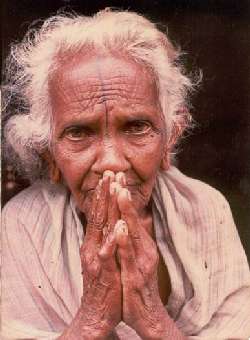
अपने लिये रोटियाँ
कभी गोल नहीं बना पाती वह।
ऐसा नहीं
कि उसने कभी क़ोशिश नहीं की
पर रोटियाँ बेलते हुए
उन्हें आकार देते हुए उसे
हर बार ये ध्यान आ जाता है
कि उसके कितने ही सपनों ने
आकार खो दिए हैं
जिन्हें साकार करने की
इच्छा तक व्यक्त नहीं कर पाती वह
तो क्या फ़र्क़ पडता है
घर की भाँति उसकी रोटियाँ
गोल हों
या आकारहीन
ज़िन्दा रहने को
बस पेट ही तो भरना है
-----------------------------------------------------------------------------------------------------------
सरफ़रोशी की तमन्ना अब हमारे दिल में है
देखना है ज़ोर कितना बाज़ुए कातिल में है l
करता नहीं क्यूँ दूसरा कुछ बातचीत,
देखता हूँ मैं जिसे वो चुप तेरी महफ़िल में है
ए शहीद-ए-मुल्क-ओ-मिल्लत मैं तेरे ऊपर निसार,
अब तेरी हिम्मत का चरचा गैर की महफ़िल में है
सरफ़रोशी की तमन्ना अब हमारे दिल में है l
वक्त आने दे बता देंगे तुझे ए आसमान,
हम अभी से क्या बतायें क्या हमारे दिल में है
खैंच कर लायी है सब को कत्ल होने की उम्मीद,
आशिकों का आज जमघट कूच-ए-कातिल में है
सरफ़रोशी की तमन्ना अब हमारे दिल में है l
है लिये हथियार दुशमन ताक में बैठा उधर,
और हम तैय्यार हैं सीना लिये अपना इधर.
खून से खेलेंगे होली गर वतन मुश्किल में है,
सरफ़रोशी की तमन्ना अब हमारे दिल में है l
हाथ जिन में हो जुनून कटते नही तलवार से,
सर जो उठ जाते हैं वो झुकते नहीं ललकार से.
और भड़केगा जो शोला-सा हमारे दिल में है,
सरफ़रोशी की तमन्ना अब हमारे दिल में है l
हम तो घर से निकले ही थे बाँधकर सर पे कफ़न,
जान हथेली पर लिये लो बढ चले हैं ये कदम.
जिन्दगी तो अपनी मेहमान मौत की महफ़िल में है,
सरफ़रोशी की तमन्ना अब हमारे दिल में है l
यूँ खड़ा मौकतल में कातिल कह रहा है बार-बार,
क्या तमन्ना-ए-शहादत भी किसि के दिल में है.
दिल में तूफ़ानों कि टोली और नसों में इन्कलाब,
होश दुश्मन के उड़ा देंगे हमें रोको ना आज.
दूर रह पाये जो हमसे दम कहाँ मंज़िल में है l
वो जिस्म भी क्या जिस्म है जिसमें ना हो खून-ए-जुनून
तूफ़ानों से क्या लड़े जो कश्ती-ए-साहिल में है,
सरफ़रोशी की तमन्ना अब हमारे दिल में है
देखना है ज़ोर कितना बाज़ुए कातिल में है l
(बिसमिल अज़ीमाबादी)
Thursday, November 11, 2010
Durga Puja.2010
 Chittaranjan is a marvelous place.. particularly when it comes to celebration .. people of Chittaranjan like celebration and are friendly. I begun to love this place.. though the opportunity are quite a less so it can be a bad news for youth.. striving for success. Fewer market and very few options to choose from.. Despite all these this place is haven on earth. Less crime-rate, good people.. environment friendly.. this picture is taken in front of a Durga puja pandal in Simjuri.. (I hope I am not wrong about the exact location, correct me in your comment) with Ankit
LAMP (Linux - Apache - MySql - PHP)
LAMP is an acronym for a solution stack of free, open source software, originally coined from the first letters of Linux (operating system), Apache HTTP Server, MySQL (database software) and Perl/PHP/Python, principal components to build a viable general purpose web server[1].
The exact combination of software included in a LAMP package may vary, especially with respect to the web scripting software, as PHP may be replaced or supplemented by Perl and/or Python.[2] Similar terms exist for essentially the same software suite (AMP) running on other operating systems, such as Microsoft Windows (WAMP), Mac OS (MAMP), Solaris (SAMP), or OpenBSD (OAMP).
Though the original authors of these programs did not design them all to work specifically with each other, the development philosophy and tool sets are shared and were developed in close conjunction. The software combination has become popular because it is free of cost, open-source, and therefore easily adaptable, and because of the ubiquity of its components which are bundled with most current Linux distributions.
When used together, they form a solution stack of technologies that support application servers.
LINUX

WHAT is Debian?
The Debian Project is an association of individuals who have made common cause to create a free operating system. This operating system that we have created is called Debian GNU/Linux, or simply Debian for short.
An operating system is the set of basic programs and utilities that make your computer run. At the core of an operating system is the kernel. The kernel is the most fundamental program on the computer and does all the basic housekeeping and lets you start other programs.
Debian systems currently use the Linux kernel. Linux is a piece of software started by Linus Torvalds and supported by thousands of programmers worldwide.
However, work is in progress to provide Debian for other kernels, primarily for the Hurd. The Hurd is a collection of servers that run on top of a microkernel (such as Mach) to implement different features. The Hurd is free software produced by the GNU project.
A large part of the basic tools that fill out the operating system come from the GNU project; hence the names: GNU/Linux and GNU/Hurd. These tools are also free.
Of course, the thing that people want is application software: programs to help them get what they want to do done, from editing documents to running a business to playing games to writing more software. Debian comes with over 25000 packages (precompiled software that is bundled up in a nice format for easy installation on your machine) — all of it free.
It's a bit like a tower. At the base is the kernel. On top of that are all the basic tools. Next is all the software that you run on the computer. At the top of the tower is Debian — carefully organizing and fitting everything so it all works together.



The exact combination of software included in a LAMP package may vary, especially with respect to the web scripting software, as PHP may be replaced or supplemented by Perl and/or Python.[2] Similar terms exist for essentially the same software suite (AMP) running on other operating systems, such as Microsoft Windows (WAMP), Mac OS (MAMP), Solaris (SAMP), or OpenBSD (OAMP).
Though the original authors of these programs did not design them all to work specifically with each other, the development philosophy and tool sets are shared and were developed in close conjunction. The software combination has become popular because it is free of cost, open-source, and therefore easily adaptable, and because of the ubiquity of its components which are bundled with most current Linux distributions.
When used together, they form a solution stack of technologies that support application servers.
LINUX
WHAT is Debian?
The Debian Project is an association of individuals who have made common cause to create a free operating system. This operating system that we have created is called Debian GNU/Linux, or simply Debian for short.
An operating system is the set of basic programs and utilities that make your computer run. At the core of an operating system is the kernel. The kernel is the most fundamental program on the computer and does all the basic housekeeping and lets you start other programs.
Debian systems currently use the Linux kernel. Linux is a piece of software started by Linus Torvalds and supported by thousands of programmers worldwide.
However, work is in progress to provide Debian for other kernels, primarily for the Hurd. The Hurd is a collection of servers that run on top of a microkernel (such as Mach) to implement different features. The Hurd is free software produced by the GNU project.
A large part of the basic tools that fill out the operating system come from the GNU project; hence the names: GNU/Linux and GNU/Hurd. These tools are also free.
Of course, the thing that people want is application software: programs to help them get what they want to do done, from editing documents to running a business to playing games to writing more software. Debian comes with over 25000 packages (precompiled software that is bundled up in a nice format for easy installation on your machine) — all of it free.
It's a bit like a tower. At the base is the kernel. On top of that are all the basic tools. Next is all the software that you run on the computer. At the top of the tower is Debian — carefully organizing and fitting everything so it all works together.
Elixir Istitute is soon going to Launch a Course fully dedicated to catter these need of industry.
Course Duration : 9 months
Contact : Office Desk for More information
Subscribe to:
Posts (Atom)